
What Pike County Deed Records Put on Paper
The Pike County Clerk records every conveyance. A deed names its grantor and grantee. It shows the recording date, the consideration when required, the legal description, and a book/page or instrument reference. Minerals may be reserved. Acreage can be excepted, a plat cited, or an earlier deed referenced, and recording makes the whole instrument a public record in Pike County, though the index alone does not decide whether each interest was validly conveyed.
| Deed Type | What It Does | Common Use |
|---|---|---|
| General warranty deed | Conveys the stated interest with broad covenants | Ordinary arm's-length conveyance |
| Quitclaim deed | Conveys only whatever interest the grantor has | Family transfers or corrective work |
| Special warranty deed | Uses more limited covenants | Entity or fiduciary transactions |
| Executor, commissioner, or sheriff deed | Documents an authorized transfer | Estate, court, foreclosure, or sale process |
| Tax-related deed | Records a transfer following the applicable process | Delinquent-tax property |
Mortgages, tax liens, easements, leases, releases, and affidavits of descent get indexed beside deeds but do different work. Pike County's coalfield history makes that distinction sharp. Never assume surface and minerals moved together.
Pike Deed Microfilm Reaches Back to 1820
The KDLA land-record inventory lists Pike County deeds from 1820 through 2016 on microfilm, plus selected tax books from 1823 and wills from 1839. That microfilm span is the documented archival record. No online index states an earliest Pike year. A blank web result proves nothing. Use the clerk counter, a precise mail request, and KDLA microfilm when a web index stops. The Pike County Public Library genealogy service helps identify local-history names and sources. The clerk controls certified record copies.
eCCLIX Access Needs a Pike County Availability Check
eCCLIX describes county-clerk index and image services offered by subscription across participating counties. Its account page requests a selected county. It also collects contact details and payment information. The service does not guarantee Pike County coverage, earliest index year, images, or cost, so ask the clerk before paying. Check the eCCLIX availability page first.
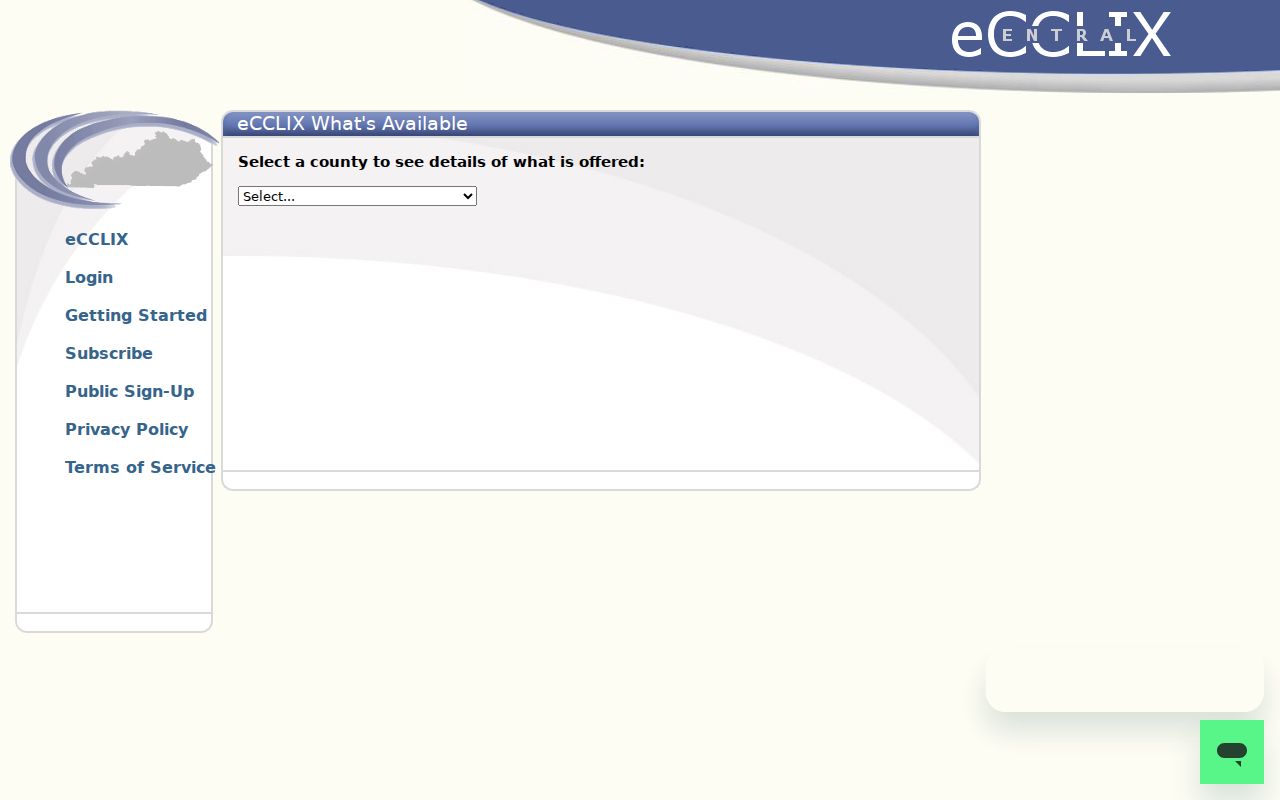
The official availability page displays each county's current participation. Treat that screen, not a vendor's general description, as the answer on any search date.
Search H, C, and S When a Pike Chain Breaks
The KDLA deed-research handout offers a practical index tip: check H for heirs, C for commissioner, and S for sheriff. Those categories can reconnect a broken chain. Death, litigation, and judicial sales interrupt grantor-grantee runs. Search spelling variants, initials, spouses, and entity names as both grantor and grantee to catch every Pike County entry.
Note: After 1890, the latest deed's prior-reference clause is often the fastest bridge to the preceding Pike County deed record.
Walk the Pike County Grantor-Grantee Index Backward
A grantee receives an interest; a grantor transfers it. Begin with the newest confirmed deed matching the correct legal description, not merely a person in Pike County who shares the name.
- Find the current owner's acquisition deed with that owner as grantee.
- Read the grantor, legal description, exceptions, and prior-recording clause.
- Search that grantor as an earlier grantee and verify the same parcel description.
- Repeat through the index, deed books, probate, and archival microfilm.
- Grantor
- The party transferring the stated interest.
- Grantee
- The party receiving the stated interest.
- Chain of title
- The connected sequence of conveyances affecting the same land.
- Book/page or instrument number
- The clerk's locator for a recorded document.
Request a Pike County Deed Copy from the Custodian
Start with whatever vendor image is already available. Turn to the clerk counter, a phone call, or a mailed request when no image exists. Use those same routes when certification is required. Give the office both party names. Add a rough recording period, the deed type, and a book/page or instrument number if you have it. A written open-records request under KRS 61.872 can identify an existing record. It works for inspection or copying. It should not ask the clerk to build a chain analysis.
For fees, KRS 64.012 sets statewide baselines for recording and copies. Confirm the current Pike County fee sheet before quoting a price. Ask whether the copy will be plain or certified. Also ask how payment and return delivery are handled.
Recorded, not guaranteed. The Pike County deed index shows documents accepted for recording. It is not a title opinion, and unrecorded or misindexed interests may exist.
Rail, River, and Coal Terms Expand a Pike Deed Search
Historic C&O Railway, bridge, Russell Fork, and coal-company terms turn up in rights-of-way, easements, reservations, and older legal descriptions across Pike County. Pikeville's historic districts offer former place names. Use those terms as index clues. Then prove every connection through the deed, plat, or court record, including names tied to the C&O Passenger Depot. Surface ownership does not include coal automatically. Review reservations, leases, releases, timber instruments, access rights, and referenced documents instrument by instrument before drawing conclusions about a Pike County parcel.
Pair Pike Deeds with Probate and Court Transfers
A death record supplies a name and a date. It does not transfer land. When a deceased owner breaks the chain, search the Pike Circuit Clerk's probate route for a will, estate file, order, commissioner action, or deed reference. Then return to the clerk's recorded instruments. The Pike County Court of Justice page gives the local starting point. Certified vital records carry eligibility limits through the Kentucky Office of Vital Statistics. Foreclosure litigation demands the same care. A complaint, judgment, or sale order explains why a name changed, but the recorded commissioner or other deed documents the conveyance itself. Record the case number, order date, sale confirmation, deed parties, recording date, and legal description separately. A correction deed may explain later index quirks.
Audit Easements, Mortgages, and Releases Beside the Deed
The clerk's permanent-retention categories reach beyond conveyances. Mortgages, lis pendens, tax liens, assignments, affidavits of descent, easements, boundary agreements, leases, wills, releases, and powers of attorney all sit in the same Pike County records. Search both parties and parcel clues across every type. A mortgage without a matching release deserves follow-up. An index result alone does not establish the present balance or priority. For each encumbrance, note its type, parties, date, book/page or number, parcel description, obligation or right, related document, and any release. That worksheet keeps a deed search honest. It prevents an overlooked access right or mineral exception in Pike County property records.
Pike County Deed Records at the Clerk Counter
When an online search comes up short, the Pike County Clerk controls the record. The office sits at 146 Main Street in Pikeville. Call 606-432-6211, or mail a request to PO Box 631, Pikeville, KY 41502. Hours change, so confirm them before you drive over. Come armed with grantor and grantee names and a rough year. Bring the instrument type, a parcel description, and any book/page or instrument number you hold. It also pays to ask about the counter. Ask whether an in-office terminal opens index years or images the public web never shows.
Copies take a little planning. For a plain copy, confirm the page count and the current charge. Confirm how the office takes payment and your delivery options. For a certified copy, state up front that you need certification. That way staff prepares it correctly. The statewide fee statute is only a baseline. The clerk's current fee sheet governs. A narrow mail request should let staff call you if one citation actually points to several instruments. That beats forcing an unsupported guess.
Requests under the Kentucky Open Records Act work the same way. Identify an existing index entry, deed image, plat, release, or other instrument. Give a useful date range plus enough party or recording detail to single out the record. The office does not assemble a title chain for you. Deciding legal priority is your job or your attorney's.
Pike County Deed Records Need an Instrument Worksheet
Every deed you pull deserves a worksheet. Capture the exact caption, deed type, grantor, grantee, execution date, recording date, consideration language, book/page or instrument number, legal description, acreage, plat reference, and prior deed reference. Add exceptions, reservations, and the preparer or return address when shown. Write all of it down before stepping backward in time. Those fields are what separate a transfer of the whole parcel from a partial interest, a correction, a boundary agreement, or a mineral exception.
Related instruments come next. Search mortgages, assignments, releases, lis pendens, tax liens, easements, leases, powers of attorney, affidavits of descent, and commissioner or sheriff deeds, matching each by parties, dates, and property description. A release must tie to the obligation it satisfies. A borrower with a similar name proves nothing.
Plat references deserve the real thing. Get the recorded plat instead of trusting a GIS outline. For metes and bounds, keep every course, monument, adjoining owner, and exception. When a boundary turns ambiguous, hand the question to a licensed surveyor and a qualified title professional rather than an inferred map trace.